

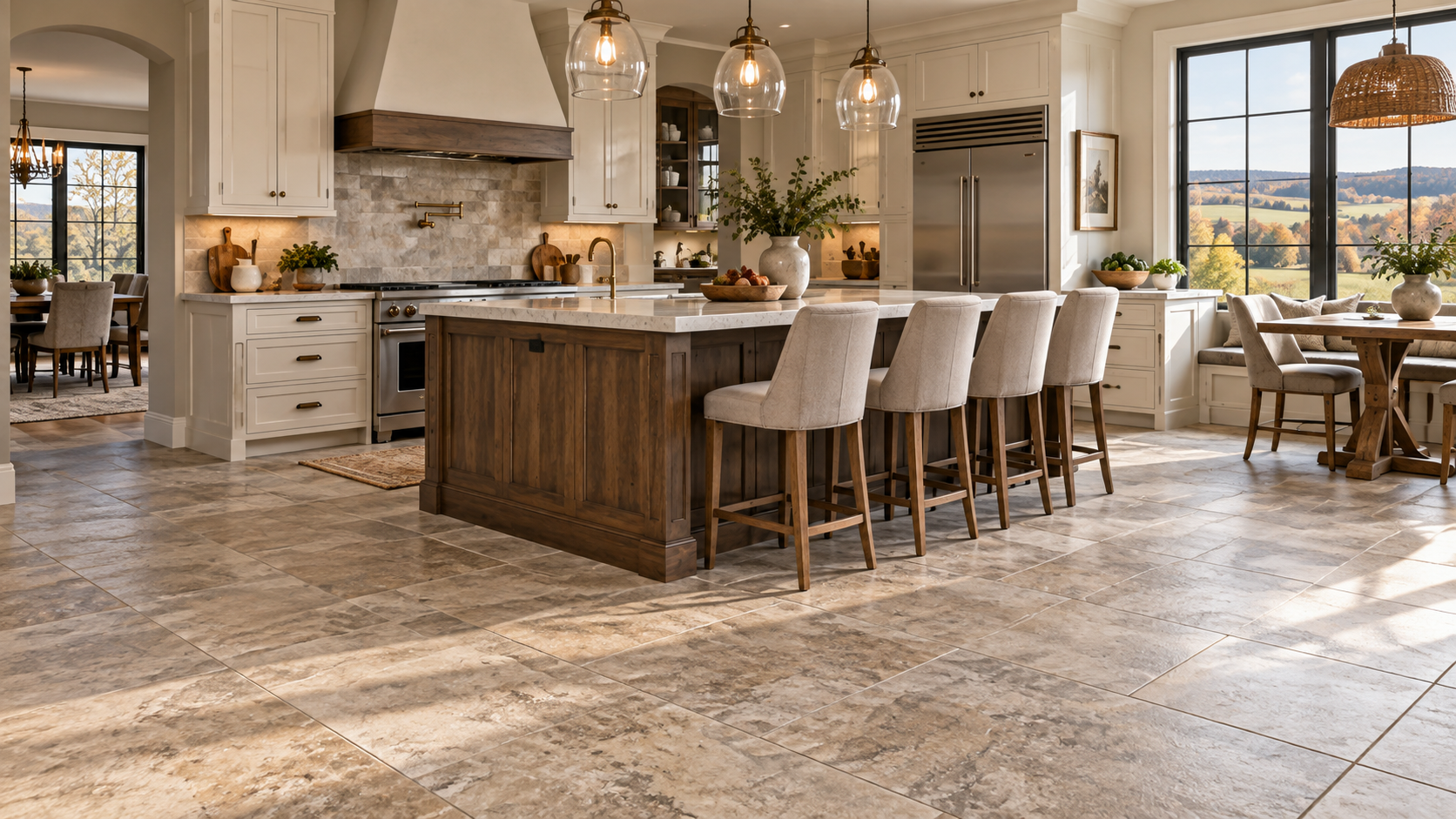
Kitchen flooring has a demanding job. It deals with muddy shoes, dropped utensils, food spills, pets, chairs being pulled in and out, and the everyday traffic that comes with one of the busiest rooms in the home. For homeowners in Green Village and across South Central Pennsylvania, there is another consideration too: flooring needs to handle changing seasons without becoming a constant maintenance project.
That is where tile earns serious consideration.
Modern tile flooring combines hard-wearing performance with far more design flexibility than many homeowners expect. Porcelain and ceramic tiles now come in convincing stone, concrete, wood and handcrafted looks, making it possible to create anything from a warm farmhouse kitchen to a clean transitional space.
At Dick's Cabinetry & Flooring, we help Franklin County homeowners compare flooring based on how it will actually perform in their homes, not simply how it looks on a sample board.
If tile is on your list for a 2026 kitchen project, here is what to know about durability, style, comfort, maintenance and choosing the right option for a Green Village home.
Why Tile Flooring Makes Sense in a Busy Pennsylvania Kitchen
The kitchen presents a different set of challenges from a bedroom or formal living room. Water can splash around the sink. Cooking creates grease and food spills. Pets travel between outside and inside. During a Pennsylvania winter, wet or snowy shoes can introduce additional moisture and grit.
Tile handles many of these everyday conditions well.
Porcelain in particular has very low water absorption. Industry standards define porcelain tile as ceramic tile with water absorption of 0.5% or less. That makes properly selected porcelain an attractive option for areas where moisture is part of normal life.
Durability is another advantage. Quality floor tile is designed to handle regular foot traffic, and many products resist scratching and staining well when matched to the correct application.
That can be valuable for family kitchens where flooring needs to accommodate:
children and pets
dining chairs moving regularly
grocery traffic through an exterior entrance
occasional spills around sinks and dishwashers
muddy shoes during spring
wet footwear during winter
frequent cleaning
Tile also gives homeowners substantial design freedom.
A durable kitchen floor no longer has to look purely utilitarian. Today's tile can recreate the movement of natural stone, the grain of wood, the visual depth of terrazzo, or the slight irregularities associated with handmade materials.
This is particularly useful in South Central PA homes, where kitchen styles can range from traditional farmhouse to transitional and contemporary.
The main trade-off is that tile is a hard surface. It can feel cooler and firmer underfoot than materials such as carpet or some resilient flooring. For a kitchen, however, many homeowners decide that easy cleaning and moisture resistance make that trade-off worthwhile.
The right answer depends on how the room is used.
Porcelain vs Ceramic Tile for a Kitchen: What Is the Difference?
Porcelain and ceramic often get grouped together, but there are useful differences to understand when choosing a kitchen floor.
Both are ceramic products. Porcelain is manufactured to meet a particularly low water-absorption standard and tends to be dense and durable.
Porcelain Tile
For many busy kitchens, porcelain is worth considering because of its low water absorption and wide range of floor-rated styles.
Porcelain is available in designs that resemble:
limestone
marble
slate
travertine
concrete
hardwood
terrazzo
That range means homeowners can choose tile for its practical advantages without giving up the visual direction they want for the kitchen.
Porcelain can also be used in larger formats, helping create a more continuous-looking floor.
One consideration is installation. Dense porcelain can be harder to cut and work with than many non-porcelain ceramic products. That makes proper tools, preparation and professional installation particularly important.
Ceramic Tile
Ceramic tile can also be a reliable choice when the particular product is rated for floor use.
It comes in a wide variety of colours, sizes and finishes and can offer excellent value for many residential applications.
The important distinction is not simply seeing the word "ceramic" and assuming every product performs identically. Different products have different recommended uses, surface characteristics and wear ratings.
For kitchen flooring, we recommend checking the manufacturer's specifications and making sure the tile is intended for the floor and traffic level involved.
Is Porcelain Better Than Ceramic for a Green Village Kitchen?
Porcelain is often the stronger all-round choice for a busy kitchen where moisture resistance and durability are high priorities. That does not mean ceramic is unsuitable.
A properly rated ceramic floor tile may work perfectly well in the right kitchen.
The better decision comes from comparing the individual product, the household's needs, the subfloor, room conditions and the style you want rather than choosing by material name alone.
2026 Tile Styles Bring Warmth and Natural Character Into Kitchens
One of the biggest changes in tile design is how easily it can complement a warm, comfortable kitchen.
Cold-looking grey tile is far from the whole story.
Current 2026 design directions include organic textures, natural stone influences, warm neutrals, larger formats and surfaces that bring subtle variation rather than looking perfectly uniform.
For Green Village homeowners, several styles are especially easy to work into existing Pennsylvania homes.
Stone-Look Porcelain
Stone-look porcelain gives homeowners the visual character of materials such as limestone, travertine or marble while providing the practical qualities of tile.
Warm beige, cream, taupe and soft earth tones can be particularly effective with:
natural wood cabinets
warm white cabinetry
Shaker doors
butcher-block accents
stone-look countertops
traditional furniture
farmhouse-inspired details
A subtle stone pattern can also hide everyday dust and footprints more forgivingly than a very dark or highly polished floor.
For households that like the character of an older Pennsylvania farmhouse but want straightforward maintenance, stone-look porcelain can bridge those needs nicely.
Large-Format Tile
Larger tile sizes continue to influence kitchen design because they reduce the number of grout lines across the floor.
Fewer visual breaks can make a kitchen feel calmer and more open.
A 12-by-24-inch format remains versatile, while larger formats can create an even broader surface depending on the dimensions of the room and the condition of the subfloor.
Large-format tile requires careful preparation. The flatter and more stable the underlying surface, the easier it is to achieve a clean installation.
In an older Franklin County home, checking the existing floor structure before selecting a very large tile can prevent problems later.
Travertine and Limestone Looks
Warm stone appearances suit the movement towards softer, earthier interiors.
A porcelain tile inspired by travertine or limestone can complement cabinetry in wood, cream, sage green, navy or warm white.
These looks work especially well when homeowners want the kitchen to feel established rather than sharply contemporary.
They can also coordinate nicely with neighbouring dining and living areas in open-plan homes.
Terrazzo-Look Tile
Terrazzo-inspired surfaces bring more pattern to the floor.
The characteristic flecks can add personality without relying on a repeating decorative motif. Depending on the colours selected, terrazzo looks can feel playful, understated or earthy.
This style works particularly well in a kitchen with relatively simple cabinets and countertops, where the floor has room to contribute more visual interest.
Wood-Look Tile
Homeowners who love the warmth of wood but are concerned about water around the kitchen may want to explore wood-look porcelain.
Plank-format tile can reproduce grain, knots and colour variations associated with hardwood.
The result is different underfoot from genuine wood, but visually it can work well in farmhouse and transitional kitchens.
It can also provide continuity in homes where warm wood tones are already part of the design.
When browsing tile flooring, it helps to compare samples alongside the cabinetry, countertops and wall colours planned for the kitchen. Flooring occupies a large visual area, so even a subtle difference in undertone can change how the whole palette feels.
Choosing the Right Tile Colour, Size and Finish
Finding a tile you like is one part of the decision. Finding one that works with the proportions, light and everyday demands of the kitchen is just as important.
Start With the Overall Colour Temperature
Kitchen materials generally lean warm, cool or somewhere between the two.
If your cabinets are natural oak, cream, warm white or deep green, a beige, warm grey, limestone or earthy tile may create a more connected palette.
Cooler cabinets can work with cleaner greys, slate looks or certain concrete-inspired tiles.
There is no need for every material to match exactly. In fact, slight contrast often makes a kitchen more interesting.
The goal is to avoid undertones that visibly fight one another.
Consider How Tile Size Changes the Room
Larger tile can make a floor look more continuous because there are fewer grout joints.
Smaller tile creates more visual rhythm and can suit traditional spaces or feature areas.
Long plank-format tiles lead the eye across the room, which can be useful when creating the visual effect of greater length.
Room shape matters as much as square footage. A sample viewed by itself cannot show how a format will behave across an entire kitchen.
Planning the layout before installation helps determine where cuts will fall and how the pattern will relate to cabinets, doorways and islands.
Matte and Textured Finishes Are Worth Considering
Kitchen floors occasionally get wet, so surface feel matters.
Highly polished tile can create a beautiful effect, but the most reflective surface is not always the most practical choice for an active kitchen.
Matte or lightly textured surfaces may provide a more forgiving everyday finish while also fitting the natural, understated aesthetic popular in 2026.
Specific slip-resistance characteristics vary between products, so checking the manufacturer's intended use is important rather than assuming that two tiles with a similar appearance will perform the same way.
Think About Grout at the Same Time
Grout colour changes the finished look more than many homeowners expect.
A grout colour close to the tile creates a quieter surface where individual tiles blend together.
Contrasting grout emphasises the layout and pattern.
For a kitchen floor, maintenance also deserves consideration. Medium-toned grout colours can be more forgiving than very bright white in areas exposed to everyday foot traffic.
The width and type of grout joint depend on the tile and installation requirements, so this is worth planning as part of the flooring selection rather than at the last minute.
How Tile Handles South Central Pennsylvania's Four Seasons
Local climate is one reason flooring recommendations for a Pennsylvania home cannot always be copied directly from a national design article.
South Central PA experiences meaningful seasonal changes.
Spring Means Moisture and Mud
Spring rainfall can mean wet shoes, muddy pets and moisture being tracked through kitchen entrances.
Tile's easy-to-clean surface makes it useful in homes where the kitchen connects to a back door, garage, porch or mudroom.
Entry mats still help capture grit before it moves across the floor, but occasional water on properly installed tile is generally straightforward to clean.
Summer Brings Humidity
Pennsylvania summers can be humid.
Tile itself does not expand and contract in the same way many wood-based floor coverings do, but the complete floor system still matters. Proper installation, movement accommodation and a stable subfloor contribute to long-term performance.
This is particularly important in older homes where the floor structure may need attention before new material goes down.
Autumn Is Renovation Season
Fall is a popular time for interior improvements across Franklin County.
Families may be preparing the house for holiday gatherings, finishing projects before winter, or updating rooms after a busy summer.
For a Green Village kitchen project, selecting tile early gives homeowners time to coordinate cabinets, countertops, paint and installation scheduling rather than making flooring a last-minute decision.
Winter Raises the Comfort Question
The most common seasonal concern about tile is simple: will it feel cold?
Tile can certainly feel cooler underfoot than carpet or some resilient flooring during a Pennsylvania winter.
That does not rule it out.
Area rugs or runners can soften specific standing areas, and some projects may be suitable for compatible radiant-floor heating systems. The feasibility depends on the installation and underlying floor assembly, so it is something to discuss during project planning rather than assuming every kitchen can use the same system.
Many homeowners ultimately decide that the durability and ease of cleaning make tile worthwhile despite the firmer, cooler feel.
What About Cleaning and Maintenance?
One reason tile works well in kitchens is that everyday care is relatively straightforward.
Regular sweeping or vacuuming removes grit that gets tracked into the room. Damp cleaning can then handle routine spills and dirt.
The exact cleaning method depends on the tile and grout selected, particularly when natural stone rather than porcelain or ceramic is involved.
For most households, practical habits make the biggest difference:
wipe up spills rather than letting them sit
remove abrasive grit regularly
use appropriate cleaners for the specific material
place mats at exterior doors
follow manufacturer recommendations for grout care
replace damaged grout or sealant where necessary rather than ignoring moisture pathways
One advantage of tile is that the flooring does not need to be treated as fragile.
A kitchen is meant to be used. Choosing a floor designed for the environment makes it easier to cook, entertain, bring in groceries and live everyday family life without constantly worrying about the surface.
Is Tile Flooring Right for Your Green Village Kitchen?
Tile deserves a close look if your priorities include durability, moisture resistance, easy cleaning and a broad range of design choices.
It can be particularly practical for:
busy family kitchens
homes with dogs or other pets
kitchens connected to outdoor entrances
farmhouse and traditional interiors
homeowners who like stone looks
households concerned about kitchen spills
open spaces where the flooring needs strong visual character
Another flooring material may suit you better if softness and warmth underfoot are your highest priorities.
That is why comparing materials in person matters.
Porcelain, ceramic, luxury vinyl, hardwood and laminate all bring different strengths. The best kitchen floor is the one whose practical qualities match your household while still giving you a room you enjoy seeing every day.
Find the Right Kitchen Tile for Your South Central PA Home
Tile flooring has earned its place in the kitchen because it brings together two things homeowners rarely want to compromise on: durability and design.
For Green Village homes, porcelain and ceramic tile can handle everyday kitchen traffic while offering styles that suit the character of South Central Pennsylvania. Warm stone looks can complement farmhouse interiors. Large-format porcelain can create a cleaner, more continuous appearance. Wood-look planks bring familiar warmth, while terrazzo-inspired designs give homeowners room to do something more distinctive.
The important part is matching the product to the home.
Dick's Cabinetry & Flooring has served Chambersburg and surrounding Franklin County communities since 2013. Our team can help you compare tile styles, formats and practical flooring options based on the way your kitchen is actually used.
If you are planning new kitchen flooring in Green Village or elsewhere in Franklin County, request an estimate or visit our showroom at 1649 Lincoln Way East in Chambersburg to explore your options in person.


