

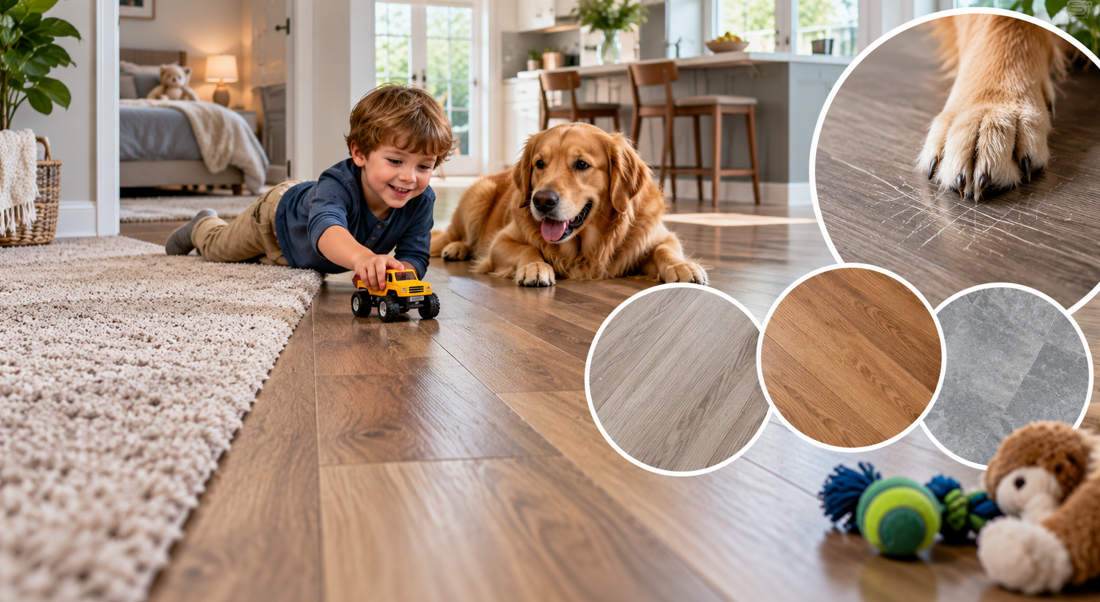
Family floors work hard. Shoes bring in grit from outside, dining chairs move back and forth, toys travel from room to room, pets race through hallways, and the occasional piece of furniture gets moved without quite enough care. Over time, all that activity can leave scratches and scuffs on flooring that was not chosen with everyday wear in mind.
For busy Cheesetown households, the best scratch-resistant flooring options in 2026 are quality luxury vinyl plank (LVP), durable laminate, porcelain or ceramic tile, and harder hardwood species with a strong factory finish. Each has different strengths, so the right choice depends on the room, your household, moisture exposure, pets, and the look you want.
At Dick's Cabinetry & Flooring, we help Franklin County homeowners compare more than colour and pattern. How a floor holds up to real family life matters just as much as how it looks on installation day.
Here is how the leading scratch-resistant options compare and where each one works best.
What Makes Flooring Scratch-Resistant?
Scratch resistance is not the same thing as overall durability.
A floor can handle heavy foot traffic well but still show fine scratches. Another material might resist scratching extremely well but be less comfortable underfoot or less suitable for certain rooms.
Several factors determine how well a floor deals with scratches.
The first is the surface itself. Vinyl and laminate floors have protective top layers designed to take everyday wear before it reaches the printed design underneath. Hardwood relies on a combination of the wood species and its protective finish. Tile has a hard fired surface that is naturally resistant to many everyday scratches.
The finish also matters. Two floors made from similar materials can perform differently because one has a stronger protective coating.
Texture and colour make a difference as well. Small marks tend to be less noticeable on floors with natural variation, visible grain, matte finishes, or mixed tones. Very dark, smooth, glossy floors can sometimes reveal dust and fine surface marks more easily.
It is worth remembering that scratch-resistant does not mean scratch-proof. Furniture dragged across a room, sharp metal edges, stones trapped under shoes, or repeated pet claw traffic can eventually mark almost any residential floor.
The goal is choosing a surface that gives your household the right balance of resistance, appearance, comfort, moisture performance, and maintenance.
1. Luxury Vinyl Plank Is a Strong All-Round Choice for Busy Families
For many active households, LVP offers one of the most practical combinations of scratch resistance, moisture resistance, comfortable everyday use, and design choice.
Modern vinyl plank flooring uses multiple layers. The decorative layer creates the appearance of wood or stone, while a transparent wear layer protects that design from daily traffic.
For a family home, the quality of that surface protection deserves close attention.
Wear-layer thickness is commonly measured in mils. A more substantial wear layer can provide additional protection, although thickness is not the entire story. The quality of the coating and construction also matter.
Some modern LVP products add aluminium oxide or other protective surface technology to improve resistance to scratches and everyday wear. Mannington, one of the flooring brands offered by Dick's, currently uses aluminium-oxide-based ScratchResist technology across its ADURA range. Mannington also lists 20-mil wear layers on several current residential products.
That type of construction makes quality LVP worth considering in homes with children and pets.
LVP also handles moisture well, which broadens where it can be used. Kitchens, family rooms, basements, hallways, and other active spaces can often use the same visual flooring, helping an open-plan home feel connected.
For Cheesetown families who like the appearance of hardwood but want less concern about muddy shoes, spills, or pet activity, vinyl plank can be a very sensible option.
Where LVP Works Particularly Well
It is especially useful in kitchens, family rooms, playrooms, finished basements, busy hallways, and homes with dogs.
The trade-off is that not every vinyl plank floor provides the same level of performance. Very budget-focused products may use thinner wear layers or less robust surface protection.
Rather than judging LVP from appearance alone, compare the wear layer, surface coating, warranty, core construction, and intended residential use. You can explore luxury vinyl flooring options and look at samples in person before deciding which construction fits your household.
2. Laminate Offers Excellent Resistance to Everyday Wear
Laminate is another strong candidate for families whose biggest concern is scratching.
The surface of laminate is different from real hardwood. A photographic design layer creates the wood appearance, while a tough transparent wear layer protects the surface.
That construction can provide very good resistance to scratches, scuffs, and everyday abrasion.
Modern laminate performance also goes well beyond a single marketing claim. The North American Laminate Flooring Association's certification system evaluates flooring across numerous areas including wear, impact, moisture resistance, staining, cleanability, dimensional stability, and surface performance. Its scratch test specifically evaluates visible damage from controlled abrasion.
For homeowners, that means it is worth looking beyond colour and plank width. Product certification and intended use provide useful clues about how the floor is expected to perform.
Laminate works particularly well where families want a realistic wood appearance combined with a hard-wearing surface.
It can be a strong choice for bedrooms, living spaces, dining rooms, hallways, and other areas where scratching from normal family traffic is a concern.
Water performance varies by product, however. Modern water-resistant and waterproof laminate products have improved considerably, but the exact installation and care recommendations still matter. In moisture-prone rooms, compare those specifications carefully.
3. Porcelain and Ceramic Tile Are Hard to Beat for Surface Toughness
When scratch resistance is the leading priority, tile deserves serious consideration.
Porcelain and ceramic tiles have hard fired surfaces that cope extremely well with normal household abrasion. Pet claws, chair movement, and everyday foot traffic are generally far less likely to leave visible scratches than they are on natural wood.
Tile also performs well around water, making it particularly useful in kitchens, bathrooms, mudrooms, entry areas, and other places where moisture and tracked-in dirt are part of daily life.
For a rural or small-town Franklin County household where family members regularly come inside from gardens, workshops, sports, or outdoor activities, that combination can be valuable.
The trade-offs are comfort and hardness.
Tile feels firmer underfoot than vinyl or laminate and can feel cool during Pennsylvania winters. Dropped glassware and dishes are also more likely to break on a hard tile surface.
Grout requires its own care as well. Choosing an appropriate grout colour and maintaining it properly helps the finished floor stay attractive.
For homeowners who like tile but want a warmer appearance, wood-look porcelain provides another option. It combines the visual direction of plank flooring with the hard surface of tile.
4. Hardwood Can Work for Families — Choose the Species and Finish Carefully
Real hardwood is beautiful and long-lasting, but it needs a different approach when scratch resistance is the main concern.
Wood species vary in hardness. The National Wood Flooring Association uses the Janka scale as a useful indicator of how well solid wood species withstand dents and dings. It notes that common species such as maple, hickory, and oak are harder than softer options including walnut, cherry, and birch. The floor's finish and construction also contribute to overall durability.
For a busy family home, a harder species can therefore be worth considering.
Surface appearance matters too. A highly smooth, dark floor may reveal every small mark. A medium-tone hardwood with visible grain, natural variation, or a lower-sheen finish can be much more forgiving in daily life.
Hardwood also has one advantage many synthetic materials do not: depending on the product and its condition, it may be possible to refinish the surface later.
That makes small marks part of a different long-term ownership equation. A scratch on hardwood does not necessarily mean the floor has reached the end of its useful life.
There is still more care involved. Protective pads beneath furniture, regular removal of grit, trimmed pet nails, and sensible cleaning habits all help preserve the finish.
For a Cheesetown family drawn to the warmth and character of real wood, hardwood remains a good option as long as the expectations match the household.
Which Scratch-Resistant Flooring Is Best for Dogs?
For many homes with active dogs, quality LVP is our strongest all-round recommendation.
It combines good surface durability with moisture resistance, straightforward cleaning, and a little more comfort underfoot than tile.
Laminate is another strong option where scratching is the biggest concern and the room is appropriate for the product's moisture rating.
Tile offers excellent scratch resistance and handles pet accidents easily, but its hard surface may not provide as much traction or comfort for some dogs.
Hardwood can work well too, particularly with harder species and durable finishes, but claws may eventually leave visible marks.
Whichever floor you choose, regular nail trimming and keeping grit off the floor help. Dirt and small stones can act like abrasives when they are caught beneath feet, paws, rugs, or furniture.
Which Flooring Is Best for Homes With Children?
Families with children usually need more than scratch resistance.
Spills, toys, dropped objects, craft projects, muddy shoes, chairs moving around the dining table, and ordinary running through the house all need to be considered.
That is why LVP and laminate often rise to the top.
LVP is particularly useful where spills and moisture are likely. Laminate offers a hard-wearing surface and realistic wood looks for living areas and bedrooms.
Tile can be excellent in entries and kitchens but feels harder for floor play.
Hardwood offers long-term character and can be a great family floor when homeowners are comfortable with some natural wear developing over the years.
A helpful way to choose is to decide what bothers you most. If a few small marks in natural wood feel like part of the home's character, hardwood may still be right. If you want a floor that asks for less attention around toys, pets, and everyday spills, LVP or laminate may provide more peace of mind.
How Do Pennsylvania Seasons Affect Durable Flooring?
Scratch resistance is important, but a floor in Franklin County also needs to suit Pennsylvania's changing seasons.
Summer brings higher humidity, while winter heating can significantly dry indoor air. Natural wood responds to those changes by expanding and contracting.
The National Wood Flooring Association recommends maintaining indoor conditions around 60–80°F and 30–50% relative humidity to minimise seasonal wood-floor movement.
That makes indoor humidity management particularly relevant for hardwood.
Rigid vinyl can be a useful alternative in spaces where seasonal conditions or moisture are bigger concerns. Some current rigid-core products are designed to tolerate wide temperature ranges, although every manufacturer's installation requirements still need to be followed.
For Cheesetown homeowners, summer is also a useful time to evaluate high-traffic areas before the wetter, cooler seasons arrive. Entryways and family rooms that look fine in July may face considerably more tracked-in moisture, grit, and indoor activity through autumn and winter.
Choosing the right flooring now can make those seasons easier on both the floor and the family maintaining it.
How Can You Prevent Scratches on Any Floor?
Even the toughest residential flooring benefits from a few simple habits.
Place quality mats at exterior doors to catch grit before it reaches the floor; use protective pads beneath chairs, tables, beds, and other furniture; lift furniture instead of dragging it; vacuum or sweep regularly, particularly around entry areas; keep pet nails trimmed; clean spills using the method recommended for the flooring; and check that rugs or floor mats have backings suitable for the specific surface.
These steps matter because many scratches are not caused by normal walking. They come from grit beneath furniture, sharp edges, repeated chair movement, or abrasive debris being dragged across the surface.
Good maintenance cannot make a floor indestructible, but it can greatly reduce unnecessary wear.
What Is the Best Scratch-Resistant Flooring for Your Cheesetown Home?
For most busy family homes, our recommendations break down like this:
Your priority | Flooring worth considering |
|---|---|
Best all-round family performance | Quality LVP |
Strong scratch resistance with wood looks | Durable laminate |
Maximum surface toughness | Porcelain or ceramic tile |
Natural material and long-term character | Harder hardwood species |
Pets plus moisture concerns | LVP or tile |
Busy kitchen | LVP or tile |
Living room or bedroom | Laminate, hardwood, or LVP |
Mudroom or entry | Tile or durable LVP |
There is no single floor that wins every category.
Tile gives you exceptional surface toughness but a firmer, colder feel. Hardwood delivers genuine natural character but can show marks from active households. Laminate performs very well against everyday wear but needs to be selected with the room's moisture conditions in mind. LVP offers perhaps the broadest balance of scratch resistance, moisture performance, comfort, and straightforward care.
That is why looking at the actual samples and comparing specifications is so useful. A product label saying “durable” tells you much less than understanding its surface construction, intended use, warranty, and care requirements.
Find Flooring That Fits Real Family Life
A family floor does not need to stay untouched to be a good floor. It needs to handle everyday life without making you worry about every chair movement, pet sprint, dropped toy, or muddy shoe.
For many Cheesetown families in 2026, quality LVP or durable laminate will provide the strongest balance of scratch resistance and everyday practicality. Tile is an excellent option where maximum toughness and moisture resistance matter, while harder hardwood species remain attractive for homeowners who value natural material and long-term character.
The right answer also changes from room to room. Your kitchen may benefit from LVP while a bedroom uses laminate or hardwood. An entry might call for tile. Choosing flooring around how each space is actually used usually produces a better result than forcing one material throughout the entire house.
Dick's Cabinetry & Flooring has been helping homeowners across Chambersburg and Franklin County choose dependable flooring since 2013. Our team can help you compare materials, understand performance differences, and find a floor that suits your family's routine as well as your home's style.
If you are planning new floors for your Cheesetown home, request an estimate or visit our Chambersburg showroom at 1649 Lincoln Way East to compare flooring options in person.


