

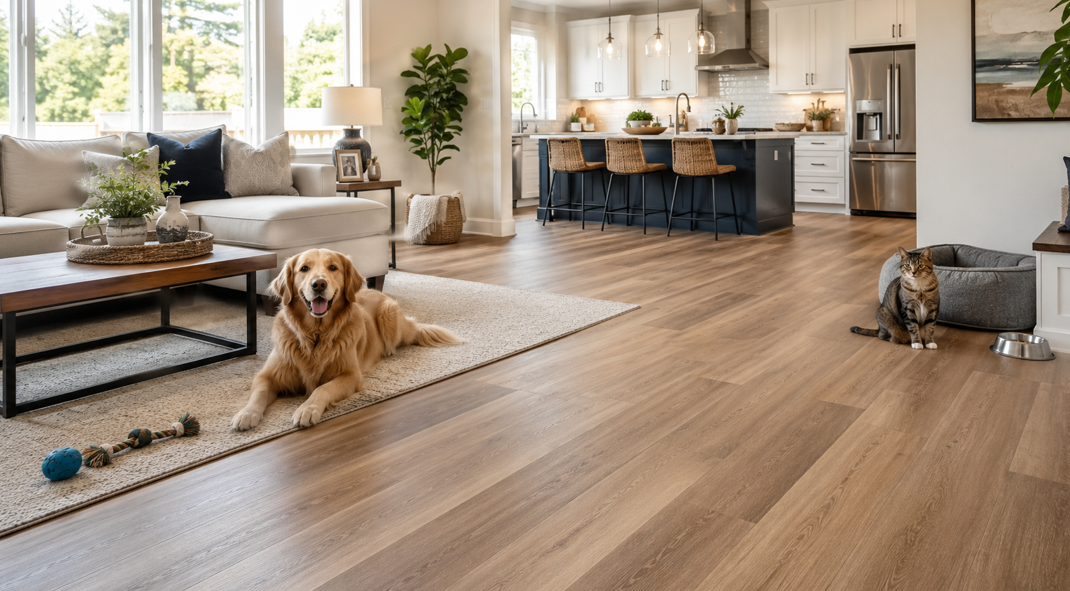
Pets bring warmth, comfort, and plenty of personality to a home. They also bring muddy paws, water bowl spills, loose fur, scratches, accidents, and the occasional dash through the house at full speed. For Green Village homeowners, choosing the right flooring can make daily life with pets much easier.
Pet-friendly flooring needs to do more than look beautiful. It needs to handle everyday wear, clean up easily, resist moisture, and feel comfortable underfoot. The best choice depends on the type of pets in the home, how active the household is, which rooms are being updated, and how much maintenance the homeowner wants to manage.
At Dick's Cabinetry & Flooring, local homeowners can explore flooring options that fit real Franklin County lifestyles. Whether you have a large dog, several cats, young children, or a busy household that sees plenty of foot traffic, the right floor can help your home stay welcoming, practical, and easier to care for year-round.
What Makes Flooring Pet-Friendly?
Pet-friendly flooring is not one specific material. It is flooring that matches the needs of the household and can handle the realities of living with animals. For many Green Village homes, this means finding a surface that balances durability, comfort, moisture resistance, and simple cleaning.
Scratch resistance is one of the first things pet owners think about. Dogs, especially larger breeds, can leave marks on softer surfaces when they run, turn quickly, or jump down from furniture. Cats can also cause wear near feeding areas, litter boxes, and favourite resting spots. A more scratch-resistant floor can help keep the home looking better for longer.
Moisture resistance is also important. Water bowls spill. Wet paws come in after spring rain. Snow and slush get tracked inside during Pennsylvania winters. Pet accidents can happen, especially with puppies, older pets, or newly adopted animals. Flooring that handles moisture well can reduce worry and make clean-up more straightforward.
Easy maintenance matters too. Pet hair, dander, dirt, and outdoor debris can collect quickly. A good pet-friendly floor should be easy to sweep, vacuum, and damp mop. It should not require frequent refinishing, special cleaners, or high-effort upkeep.
Comfort is another detail worth considering. Pets spend a lot of time on the floor. A surface that is too slippery may be harder for older dogs to walk on, while a very cold or hard floor may be less comfortable for pets that like to stretch out.
The most pet-friendly floors usually offer:
Strong scratch resistance
Good moisture protection
Easy cleaning
Stain resistance
Comfortable everyday use
Reliable traction
Long-lasting performance
A style that suits the home
For Green Village homeowners, the best flooring choice is often the one that supports both the people and pets living in the house.
Luxury Vinyl Plank: A Top Choice for Pet Owners
Luxury vinyl plank, often called LVP, is one of the most popular pet-friendly flooring choices for good reason. It offers the warm look of hardwood while providing practical features that work well in homes with pets.
Many LVP products are waterproof or highly water-resistant, which makes them a strong option for kitchens, hallways, family rooms, mudrooms, laundry areas, and basements. If a water bowl spills or a pet comes inside with wet paws, the floor is much easier to manage than more moisture-sensitive materials.
LVP is also known for its durability. A good wear layer helps protect the surface from scratches, scuffs, and everyday activity. While no flooring is completely damage-proof, quality LVP is built to handle the kind of daily wear that comes with pets, children, and active households.
Another reason Green Village homeowners like LVP is the variety of styles available. Modern luxury vinyl plank can closely resemble oak, hickory, maple, walnut, weathered barnwood, and other wood looks. Homeowners can choose warm farmhouse-inspired tones, lighter natural colours, classic mid-browns, or deeper rustic finishes.
For homes with pets, medium-tone wood looks are often a practical choice. Very dark floors can show dust, fur, and paw prints more easily, while very light floors may show certain stains or debris. A balanced mid-tone plank can help hide everyday mess between cleanings.
Texture is also helpful. Lightly textured LVP can add a more realistic wood feel while giving pets better traction than a very smooth surface. This can be especially important for older dogs or pets that move quickly through the house.
When exploring luxury vinyl flooring, homeowners may want to compare products based on wear layer, waterproof construction, texture, plank colour, and warranty coverage. These details can make a big difference in how well the floor performs in a pet-friendly home.
For many families, LVP offers the best mix of durability, style, comfort, and value for money.
Tile Flooring: Durable, Moisture-Resistant, and Easy to Clean
Tile is another strong flooring option for pet owners, especially in rooms that deal with moisture. Kitchens, laundry rooms, bathrooms, mudrooms, and entryways can all benefit from tile’s durability and easy-clean surface.
One of tile’s biggest advantages is moisture resistance. Pet accidents, water spills, muddy paw prints, and wet winter boots are easier to clean from tile than from many other surfaces. This makes it a practical fit for Green Village homes that see plenty of outdoor activity.
Tile is also highly scratch-resistant. Dogs and cats are much less likely to leave visible claw marks on tile than on softer flooring materials. For homeowners with large dogs, this can be a major benefit.
Style options are broad as well. Tile can look classic, rustic, modern, farmhouse-inspired, or natural. Wood-look tile can offer the appearance of hardwood with the moisture resistance of tile. Stone-look tile can bring texture and character to a kitchen or entryway. Patterned tile can add personality to a laundry room or bathroom.
There are a few comfort points to consider. Tile is harder underfoot than LVP, carpet, or some wood products. It can also feel cool, especially during Pennsylvania winters. Some homeowners like this in summer, but pets that prefer warmer surfaces may gravitate towards rugs or pet beds.
Slip resistance is another important detail. A very glossy tile may be easier for pets to slide on, while a textured or matte tile can offer better traction. For older pets, traction can be especially important.
Grout maintenance is also worth thinking about. Grout lines can collect dirt if not sealed or maintained properly. Choosing a darker grout or stain-resistant grout can make pet-related cleaning easier.
Tile works especially well in:
Mudrooms
Laundry rooms
Bathrooms
Kitchens
Entryways
Pet feeding areas
Sunrooms
For homeowners who want maximum durability in moisture-prone rooms, tile can be an excellent choice. It may not be the softest flooring in the home, but it is reliable, long-lasting, and well suited to pets.
Laminate Flooring: Better Than Ever, With Some Considerations
Laminate flooring has improved significantly over the years. Today’s laminate products can offer realistic wood looks, stronger surface protection, and better resistance to everyday wear than many older styles. For pet owners, laminate can be a practical and budget-friendly option in the right areas.
One of laminate’s strengths is scratch resistance. Many laminate floors have a tough surface layer that handles claws, furniture movement, and foot traffic well. For homes with active dogs or cats, this can be a strong advantage.
Laminate also offers attractive wood-look styles at a more affordable price point than many hardwood options. Green Village homeowners who want the look of oak, hickory, or rustic farmhouse planks may find laminate appealing, especially for living rooms, bedrooms, and hallways.
However, moisture resistance varies by product. Some modern laminate floors offer improved water resistance, but not all laminate is designed for standing water, pet accidents, or repeated spills. This makes product selection very important. In homes with pets, water-resistant laminate may be worth considering, especially in areas where occasional spills are likely.
Laminate can sometimes feel a little slippery depending on the finish. For older pets, a textured option may provide better footing. Rugs and runners can also help in high-traffic paths, but rug pads should be chosen carefully so they do not damage the floor.
Laminate may be a good fit for:
Living rooms
Bedrooms
Hallways
Dining rooms
Low-moisture family spaces
Budget-friendly whole-home updates
It may be less ideal for bathrooms, laundry rooms, or areas where accidents and moisture are frequent unless the product is specifically designed for those conditions.
For pet owners, the key is choosing a quality laminate with strong surface durability and suitable moisture protection. With the right product and proper care, laminate can offer a beautiful wood-look floor at a sensible price.
Hardwood Flooring and Pets: Beautiful, But Choose Carefully
Hardwood flooring is loved for its natural beauty, warmth, and long-lasting appeal. In many Franklin County homes, hardwood fits beautifully with farmhouse style, traditional interiors, and classic Pennsylvania character. However, pet owners need to choose carefully.
Hardwood can work in homes with pets, but it requires more attention than LVP, tile, or laminate. Dog nails can scratch wood, water can cause damage if left sitting, and pet accidents may stain or affect the finish if not cleaned quickly.
That does not mean pet owners have to avoid hardwood altogether. It means the right species, finish, colour, and maintenance habits matter.
Harder wood species tend to hold up better than softer ones. Matte or satin finishes often hide small marks better than glossy finishes. Textured or hand-scraped looks can also help disguise everyday wear. Medium wood tones are usually more forgiving than very dark or very light colours.
For homes with pets, homeowners may want to consider:
Harder wood species
Matte or satin finishes
Textured surfaces
Medium-tone stains
Protective rugs in high-traffic areas
Regular nail trimming for dogs
Quick clean-up of spills and accidents
Entry mats near exterior doors
Pennsylvania’s seasonal climate also matters. Cold winters and forced-air heating can reduce indoor humidity, while summer humidity can increase moisture levels. Wood naturally responds to these changes. Proper installation, acclimation, and indoor humidity management can help hardwood perform better over time.
Hardwood may be a great choice for homeowners who value natural materials and are comfortable with some maintenance. It may not be the easiest flooring for every pet-heavy household, but it can still work beautifully when chosen and cared for thoughtfully.
For homeowners with large active dogs, frequent accidents, or a need for low-maintenance flooring, LVP or tile may be a more practical choice. For quieter households with smaller pets and careful upkeep, hardwood can still be a beautiful long-term investment.
Carpet in Pet-Friendly Homes: Comfort With the Right Product
Carpet is soft, warm, and comfortable, which makes it appealing in bedrooms, family rooms, and cosy living spaces. Pets often love carpet because it gives them a soft place to rest and better traction than slick hard surfaces.
For Green Village homes, carpet can be a good pet-friendly option when the right product is chosen. The key is selecting carpet designed for stain resistance, durability, and easier cleaning.
Pet-friendly carpet often includes features such as stain-resistant fibres, stronger backing, and protection against spills soaking through too quickly. Some carpets are designed to resist pet stains and odours more effectively than standard carpet.
Fibre choice matters. Nylon is known for durability and resilience, while certain polyester carpets can offer good stain resistance and softness. The best choice depends on the room, budget, and level of pet activity.
Pile height is another detail. Lower-pile carpets are often easier to clean than very thick or shaggy styles. They can also make it easier to remove pet hair with regular vacuuming. Patterned or multi-tone carpets may help hide everyday fur and debris between cleanings.
Carpet can be a good fit for:
Bedrooms
Low-traffic sitting rooms
Family rooms with calmer pets
Homes where comfort is a top priority
Areas where traction matters for older pets
Carpet may be less ideal in rooms where accidents, moisture, or muddy paws are common. Entryways, kitchens, bathrooms, and laundry areas usually benefit from hard-surface flooring instead.
For pet owners who love carpet, a practical approach is to use it in comfort-focused rooms and choose LVP, tile, or laminate in moisture-prone areas. This creates a balance between softness and easy maintenance.
How to Choose the Best Pet-Friendly Flooring for Your Home
The best pet-friendly flooring depends on the household. A family with two large dogs may need a different floor than a homeowner with one indoor cat. A busy house with children and pets may need more durability than a quiet home with older pets.
Start by thinking about the pets themselves. Size, age, activity level, and habits all matter. Large active dogs may need scratch-resistant hard surfaces. Older pets may need better traction. Puppies or senior pets may require flooring that handles accidents well. Long-haired pets may make easy cleaning a higher priority.
Next, think about the room. A mudroom needs different flooring than a bedroom. A kitchen needs moisture resistance and easy cleaning. A family room needs comfort and durability. A basement may need waterproof performance because lower levels can be more prone to moisture.
It also helps to think about maintenance. Some homeowners do not mind regular care and occasional refinishing. Others want a low-maintenance surface that can be cleaned quickly. There is no wrong answer, but the flooring choice should match the amount of care the homeowner realistically wants to provide.
A helpful decision guide:
Choose LVP for the best overall mix of water resistance, durability, and style
Choose tile for maximum moisture resistance in kitchens, bathrooms, and mudrooms
Choose laminate for scratch resistance and budget-friendly wood looks
Choose hardwood for natural beauty when maintenance is acceptable
Choose carpet for softness and comfort in lower-risk rooms
For many Green Village homes, a mixed flooring plan works best. LVP or tile may be ideal near entrances, kitchens, and laundry areas, while carpet may make sense in bedrooms. Hardwood can be used in main living areas when the homeowner wants natural character and is prepared for care.
The right flooring plan supports daily life instead of working against it.
Simple Care Tips for Floors in Homes With Pets
No matter which flooring material you choose, good habits can help protect your investment. Pet-friendly flooring performs best when it is paired with simple, consistent care.
Place mats near exterior doors to catch dirt, grit, snow, and moisture before pets track it through the home. This is especially helpful during Pennsylvania winters and rainy spring days.
Keep pet nails trimmed when possible. This can reduce scratching on hard surfaces and snagging on carpet. It can also help pets walk more comfortably.
Clean spills and accidents quickly. Even water-resistant flooring benefits from prompt clean-up. For carpet, quick action can help reduce staining and odour concerns.
Vacuum or sweep regularly to remove fur, grit, and dander. Dirt particles can act like sandpaper over time, especially in high-traffic areas.
Use furniture pads under chairs, tables, and heavy furniture. If pets run through rooms often, pads can help reduce movement and surface marks.
Care habits include:
Use entry mats
Trim pet nails regularly
Wipe paws during wet weather
Clean spills quickly
Vacuum or sweep often
Use approved cleaners
Add rugs in high-traffic paths
Choose washable rugs where possible
With the right flooring and simple care, pet owners can enjoy a home that feels comfortable, clean, and easy to live in.
Final Thoughts
Pet-friendly flooring should make life easier, not more stressful. For Green Village homeowners, the best choice is usually one that balances durability, moisture resistance, comfort, easy cleaning, and style.
Luxury vinyl plank is often the top all-around choice for homes with pets because it is durable, water-resistant, comfortable, and available in beautiful wood-look styles. Tile is excellent for moisture-prone rooms. Laminate can offer strong scratch resistance at a budget-friendly price. Hardwood brings natural beauty but needs more care. Carpet adds warmth and comfort when chosen carefully for the right rooms.
Dick’s Cabinetry & Flooring has been helping Franklin County homeowners since 2013 with friendly local service, knowledgeable guidance, and products the team personally stands behind. To explore pet-friendly flooring options for your Green Village home, request an estimate or visit the Chambersburg showroom to compare materials, colours, and samples in person.


