

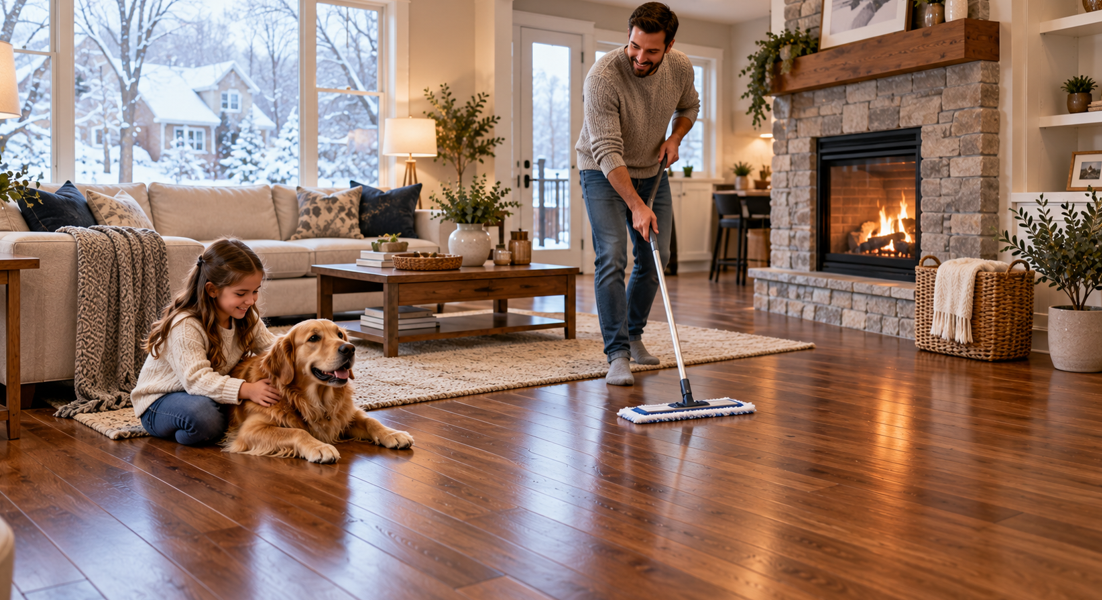
Winter in Kauffman brings crisp mornings, snowy driveways and the steady hum of the furnace. It also brings a challenge many homeowners do not notice until it shows up on their floors. Cold outdoor air holds little moisture, and forced-air heating dries the indoor air even further. Hardwood responds by shrinking slightly, which can lead to gaps, squeaks and dull spots. At Dick's Cabinetry & Flooring, we have been installing and repairing hardwood across Franklin County since 2013, and we see these winter effects every year.
The good news is that a few simple habits can protect your floors through the coldest months. This guide explains what happens to hardwood in winter and gives you a practical care routine for your Kauffman home.
Why Pennsylvania Winters Are Tough on Hardwood
Wood is a natural material that expands and contracts with moisture. In humid summer months, boards absorb moisture and swell slightly. In winter, they release it and shrink.
In South Central PA, the drop in indoor humidity during heating season can be significant. Common signs include:
Gaps between boards. Thin lines appear as planks contract.
Squeaks and creaks. Small movements in shrinking boards can cause noise underfoot.
Cupping or checking. Large humidity swings can strain the wood surface.
Dull or scratched finish. Winter grit and salt tracked in from outdoors wears down the protective coat.
Some seasonal gapping is normal and usually closes up again in spring. The goal of winter care is to keep these changes small and protect the finish.
Step 1: Keep Indoor Humidity Steady
Humidity control is the most important part of winter hardwood care. Most flooring manufacturers recommend keeping indoor relative humidity within a moderate range year-round.
Here is how to manage it:
Use a humidifier. A whole-home humidifier connected to your heating system is the most effective option. Portable units can help in individual rooms.
Buy a hygrometer. This small, affordable device shows your indoor humidity so you know when to adjust.
Keep the thermostat consistent. Large temperature swings speed up moisture loss. A steady setting is kinder to your floors.
Avoid placing heaters too close to the floor. Space heaters aimed at hardwood can dry out boards in one spot.
Step 2: Stop Snow, Salt and Grit at the Door
Local winters mean snow, slush and road salt, all of which can damage hardwood.
Place mats inside and outside every entrance. A coarse outdoor mat traps grit, while an absorbent indoor mat catches moisture.
Set up a boot tray. Give wet boots a place to drip that is not your floor.
Make shoes-off a house rule. It is the simplest way to keep salt and sand away from your finish.
Wipe up melted snow promptly. Standing water and salt residue can stain and dull hardwood.
Step 3: Clean the Right Way
Winter cleaning needs a gentle touch:
Sweep or vacuum often with a soft brush attachment to remove grit before it scratches.
Use a cleaner made for hardwood floors rather than general household products.
Mop with a lightly damp microfiber pad, never a soaking wet one.
If salt leaves a white film, use a hardwood-safe cleaner to lift it gently.
Step 4: Protect Against Scratches and Dents
Winter means more time indoors, which often means more foot traffic, more furniture moving and more family gatherings.
Add felt pads to chair and table legs.
Use area rugs in high-traffic zones such as hallways and entries.
Lift furniture rather than dragging it when rearranging for the holidays.
Keep pet nails trimmed to reduce scratches.
Step 5: Know When to Call a Professional
Some winter issues need expert attention. Reach out to a flooring specialist if you notice:
Gaps that stay wide well into spring
Boards that cup, crown or lift
Deep scratches or worn areas where the finish has gone
Water damage from a leak or melted snow
Dick's offers hardwood floor repair as one of our specialist services, so our team can assess the damage and recommend the right fix for your home. Many small issues can be repaired without replacing the whole floor, which saves time and money.
Choosing Hardwood That Handles Pennsylvania Seasons
If you are planning new floors, it helps to consider how different products handle seasonal changes. Engineered hardwood has a layered construction that makes it more stable than solid wood when humidity rises and falls, which can be a great choice for homes with big seasonal swings. Solid hardwood offers timeless character and can be refinished several times over its life.
Our hardwood selection includes trusted brands such as Bruce, Mannington, Mirage, Lauzon, Boen, HomerWood and Chesapeake Flooring. You can browse our full range of hardwood flooring online, order samples to your home and use our in-room visualizer to see how each option looks in your space.
A Simple Winter Hardwood Checklist
Keep this quick list handy through the colder months:
Check indoor humidity weekly with a hygrometer
Run a humidifier during heating season
Keep mats at every entrance
Sweep or vacuum grit several times a week
Wipe up snow and salt promptly
Use felt pads and rugs in busy areas
Keep Your Kauffman Floors Beautiful All Winter
A little care goes a long way toward keeping hardwood floors healthy through a Pennsylvania winter. Steady humidity, clean entries and gentle cleaning will help your floors look their best when spring arrives.
Our family-run team is here for advice, repairs and new installations. Visit our showroom at 1649 Lincoln Way East in Chambersburg, open weekdays from 8:00 am to 5:00 pm and Saturdays from 8:00 am to 12:00 pm, or call (717) 267-0333. Contact our team to book a free in-home estimate or schedule a hardwood repair visit.


