

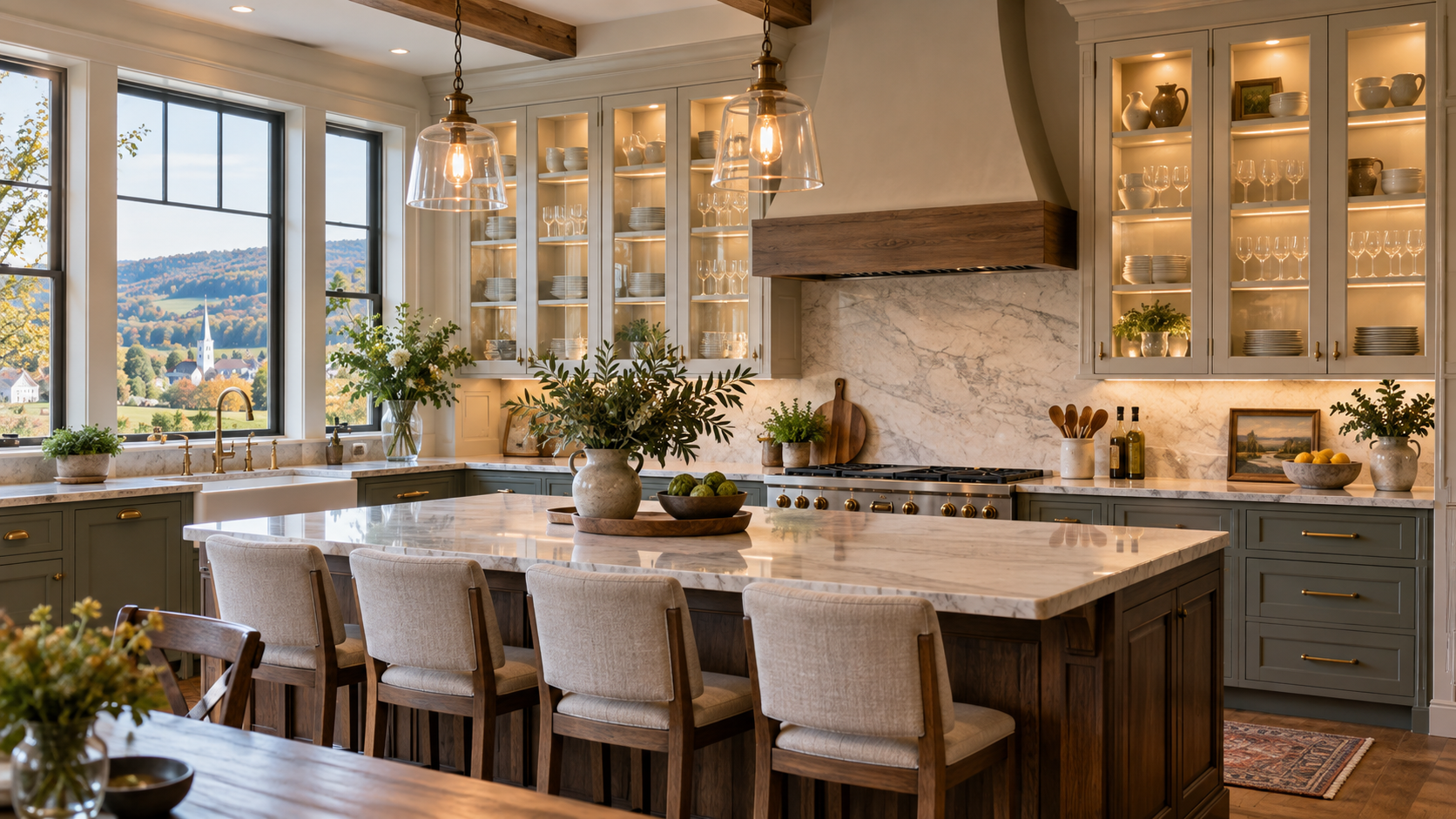
A kitchen can have plenty of storage and still feel flat if every upper cabinet looks exactly the same. That is one reason glass-front cabinet doors are getting renewed attention in 2026. They break up long runs of solid doors, add depth and reflection, and give homeowners a practical way to display pieces they actually enjoy seeing.
For Marion, PA homeowners, glass-front cabinetry can work especially well in kitchens that lean traditional, farmhouse, transitional, or warm contemporary. A few carefully placed glass doors can make the room feel lighter without giving up the storage that everyday kitchens need.
At Dick's Cabinetry & Flooring, we help Franklin County homeowners compare cabinet styles, finishes, layouts, and practical details before making a decision. Glass-front doors are not the right choice for every cabinet in every kitchen, but in the right location they can add character without making the space feel busy.
Here is what to consider when deciding whether glass-front cabinets belong in your 2026 kitchen project.
Why Glass-Front Cabinet Doors Are Appealing Again in 2026
The current cabinet conversation is moving away from kitchens that feel overly uniform. Homeowners still want clean lines and useful storage, but many also want a room that feels personal, warm, and connected to the rest of the home.
Glass-front doors fit that direction because they create contrast. A wall of painted or wood cabinets can feel visually heavy when every door is solid. Replacing a small number of upper doors with glass changes the rhythm of the room. Light can move through the cabinet fronts, displayed pieces add colour and texture, and the kitchen gains a more furnished, collected look.
That does not mean the whole kitchen needs glass. In many homes, the strongest design comes from using glass selectively. Two doors beside a range hood, a pair of upper cabinets near a window, or one display cabinet at the end of a run can be enough to make the cabinetry feel more interesting.
Glass also works across several design styles. Clear panes can suit a classic Shaker kitchen. Reeded or textured glass can bring softness to a more contemporary cabinet style. Seeded glass can complement farmhouse-inspired spaces where natural materials and less-than-perfect textures already feel at home.
The practical appeal matters, too. Glass-front doors let you see frequently used items at a glance, and they can turn attractive everyday pieces—white dishes, glassware, serving bowls, or cookbooks—into part of the room's design.
The key is balance: enough glass to add openness and personality, with enough solid cabinetry to keep the kitchen calm and easy to live with.
Where Glass-Front Cabinets Work Best
Placement matters more than quantity. Glass doors are most successful when they highlight a useful or attractive part of the kitchen rather than exposing every shelf.
Upper Cabinets Near a Window
A glass-front upper cabinet near a window can help a wall feel less enclosed. Natural light reflects from the glass, and the transparent or translucent surface creates a sense of depth.
This can be particularly useful in smaller kitchens where homeowners want storage but do not want upper cabinetry to feel heavy.
Cabinets Beside the Range Hood
A pair of glass-front cabinets on either side of a hood creates symmetry and gives the cooking zone a focal-point feel. This arrangement works with painted cabinets, natural wood, or a combination of the two.
It is also an easy place to display matching dishes or glassware, keeping the contents visually organised.
Beverage and Coffee Stations
Dedicated beverage areas continue to be popular because they keep frequently used items together. Glass doors work naturally in these zones because mugs, glasses, coffee cups, and serving pieces tend to be attractive enough to display.
Interior lighting can make a beverage station feel especially finished in the evening, while still serving a practical purpose.
Hutches and Tall Cabinet Features
A built-in hutch or tall cabinet can become a strong visual feature when the upper portion has glass doors and the lower portion remains solid. This gives homeowners room to display favourite pieces while keeping less decorative items behind closed doors.
For homes with farmhouse or traditional details, this approach can make new cabinetry feel more like furniture.
A Small Accent Zone
Some kitchens need very little glass to get the effect. A single corner cabinet, one section near the dining area, or two doors at the end of a cabinet run can add interest without changing the practical nature of the room.
For many Marion kitchens, this selective approach is a good starting point because it adds personality while keeping everyday storage straightforward.
Clear, Reeded, Frosted, or Seeded Glass: Which Look Fits Your Kitchen?
The type of glass changes both the appearance of the cabinets and how much organisation is visible behind the doors.
Glass style | What it looks like | Best fit | What to keep in mind |
|---|---|---|---|
Clear glass | Fully transparent and crisp | Neatly arranged dishes, glassware, display pieces | Contents stay visible at all times |
Reeded glass | Vertical textured lines | Transitional and contemporary kitchens | Softens the view while still showing shape and light |
Frosted glass | Diffused, cloudy surface | Homeowners who want a lighter look with more privacy | Hides detail but reduces the display effect |
Seeded glass | Small bubbles or irregular texture | Farmhouse, cottage, and traditional kitchens | Adds character and a handcrafted feel |
Decorative patterned glass | Etched or textured designs | Feature cabinets and statement areas | Strong patterns work best in limited quantities |
Clear Glass for a True Display Cabinet
Clear glass gives the most open appearance. It works beautifully when the shelves hold items that naturally coordinate, such as white dinnerware, clear glasses, pottery, or a small collection.
The trade-off is visibility. If the cabinet is filled with mismatched food containers, medicine bottles, or stacks of everyday clutter, clear glass may create more visual noise than you want.
Reeded Glass for Texture Without Full Exposure
Reeded glass is a useful middle ground. The vertical texture catches light and adds detail, while partially obscuring what is inside.
It can pair well with flat-panel doors, Shaker cabinetry, warm wood finishes, and painted colours. Because it adds texture without relying on a bold pattern, it can give a kitchen personality while still feeling restrained.
Frosted Glass for a Softer Look
Frosted glass allows light to pass through but hides most cabinet contents. This can work well for homeowners who like the lighter appearance of glass but do not want to arrange every shelf as a display.
It is especially useful in busy family kitchens where the goal is visual softness rather than showing off a collection.
Seeded Glass for Farmhouse Character
Seeded glass has small bubbles and subtle variations that give it an older, handcrafted appearance. It can be a natural match for farmhouse-inspired cabinetry, traditional hardware, natural wood tones, and homes where the kitchen already includes warm, textured materials.
In Franklin County, where farmhouse and rural design influences remain familiar, seeded glass can feel at home without making a kitchen look themed.
Pair Glass Doors With Cabinet Colours and Finishes That Feel Intentional
Glass works best when it feels like part of the cabinetry plan from the beginning.
Warm wood cabinetry is one strong pairing. Natural grain already adds movement and texture, while glass creates a lighter break within the wood. A white oak or medium-tone wood kitchen, for example, can use clear or reeded glass to keep the room feeling open.
Painted cabinets offer a different opportunity. Deep green, navy, warm white, soft taupe, and other grounded colours can become less visually heavy when a few upper doors are glass. The glass creates contrast without introducing another cabinet colour.
Shaker doors are especially flexible. Their simple frame naturally suits a glass insert, making it easy to mix solid and glass-front doors while keeping the profiles consistent.
For homeowners planning a larger update, it helps to look at the whole cabinetry layout rather than choosing glass inserts separately. Door style, finish, hardware, lighting, countertop material, backsplash, and the items you plan to display all affect the final result.
A useful rule is to repeat materials and details rather than adding too many unrelated finishes. If the kitchen already has warm wood, brushed metal hardware, and a textured backsplash, a simple clear or lightly textured glass may be enough. If the rest of the room is very quiet, a more distinctive seeded or reeded glass can become the feature.
Make Glass-Front Cabinets Practical for Everyday Life
A good kitchen has to work after the renovation photos are taken. Before choosing glass-front doors, think about what will live behind them and how you use the room every day.
Put Display-Friendly Items Behind Glass
Glass-front cabinets are ideal for things that are both useful and attractive:
everyday plates and bowls in a coordinated colour
glassware and mugs
serving dishes
pitchers and decanters
cookbooks
pottery or collected pieces
neatly arranged baking dishes
Items that tend to look cluttered can stay behind solid doors. Mixing glass and solid fronts gives you both display space and hidden storage.
Consider Interior Cabinet Lighting
Lighting can turn glass cabinetry from a daytime detail into an evening feature. Low-profile LED strips or small integrated lights can illuminate shelves, make glassware easier to find, and add a soft layer of light to the room.
Warm light often works well with wood cabinetry, warm whites, and farmhouse finishes. The lighting can be planned at the same time as the cabinet layout so wires, switches, and power sources remain tidy.
Think About Shelf Material
Wood shelves create a warmer, more substantial look, while glass shelves allow light to pass from one level to the next. The best choice depends on what you plan to store and the style of the cabinet.
Heavier dishes may be better suited to solid shelves, while glass shelving can work well for lighter display pieces.
Plan for Cleaning
Glass doors show fingerprints and cooking residue more readily than solid wood or painted doors, especially near busy prep and cooking areas. That does not make them impractical, but location matters.
Placing glass-front cabinets slightly away from the range or main food-prep zone can reduce frequent cleaning. A simple glass cleaner and soft cloth are usually enough for routine care.
Keep the Contents Relaxed, Not Perfect
Glass-front cabinetry does not require every shelf to look like a showroom. Repeating a few colours or materials is enough to make the display feel organised.
A stack of white bowls, a row of glasses, a wooden serving board, and a few pieces of pottery can look natural and lived-in. The goal is a kitchen that feels personal, not staged.
What Works Well in Marion, PA Homes?
Homes around Marion and Franklin County include a mix of traditional layouts, rural properties, updated family homes, and kitchens influenced by farmhouse design. Glass-front cabinet doors can bridge those styles because the same idea can be adapted to feel classic, rustic, or contemporary.
In a farmhouse-leaning kitchen, seeded glass with warm wood or painted Shaker cabinets can reinforce the home's character. In a more updated space, reeded glass with clean hardware can add texture without making the cabinetry ornate. In a smaller kitchen, clear glass in a few upper cabinets can visually break up a wall of storage.
Pennsylvania's changing seasons are also worth keeping in mind during a cabinet project. Indoor humidity can shift between humid summers and dry heating months, and natural wood components respond to those changes. Well-made cabinetry, proper installation, and appropriate indoor humidity help wood doors and frames perform well over time.
Fall is also a common time for Franklin County homeowners to think about interior projects before the holiday season. If a kitchen update is being planned for autumn, deciding early which cabinets will use glass gives the design team time to coordinate door style, glass type, shelving, and lighting rather than treating the glass as an add-on at the end.
The local connection matters because a cabinet detail that looks good online still has to fit the home in front of you. Ceiling height, natural light, existing trim, room size, and the way your family uses the kitchen all influence how much glass makes sense.
Are Glass-Front Cabinets Right for You?
Glass-front doors are worth considering when you want to:
break up a long wall of solid cabinetry
make a smaller kitchen feel visually lighter
display dishes, glassware, pottery, or collected pieces
add character without changing the entire cabinet colour
create a focal point around a hutch, beverage station, or range hood
introduce texture through reeded, seeded, or frosted glass
add interior cabinet lighting for a warmer evening look
Solid doors may be the better fit for areas where storage tends to be less organised or where you want the calmest possible appearance.
For many kitchens, the answer is a mix. Solid cabinetry handles the everyday storage, while a few glass-front doors create the visual moments that give the room personality.
A Small Cabinet Detail Can Change the Whole Kitchen
Glass-front cabinet doors are not about turning every shelf into a display. Their strength comes from selective use. A pair of glass uppers, a lit beverage cabinet, or a furniture-style hutch can soften a wall of cabinetry and make the kitchen feel more personal.
For Marion, PA homeowners planning a 2026 kitchen update, the best glass style depends on the rest of the room. Clear glass feels open and classic, reeded glass adds texture, frosted glass offers more privacy, and seeded glass brings a traditional or farmhouse character. Pair the right glass with a cabinet finish, layout, and lighting plan that works for everyday life.
Dick's Cabinetry & Flooring has served the Chambersburg and Franklin County area since 2013, helping local homeowners compare practical, well-made options for their homes. If you are considering new cabinets or want to see how glass-front doors could fit your kitchen, request an estimate or stop by the showroom at 1649 Lincoln Way East in Chambersburg.


