

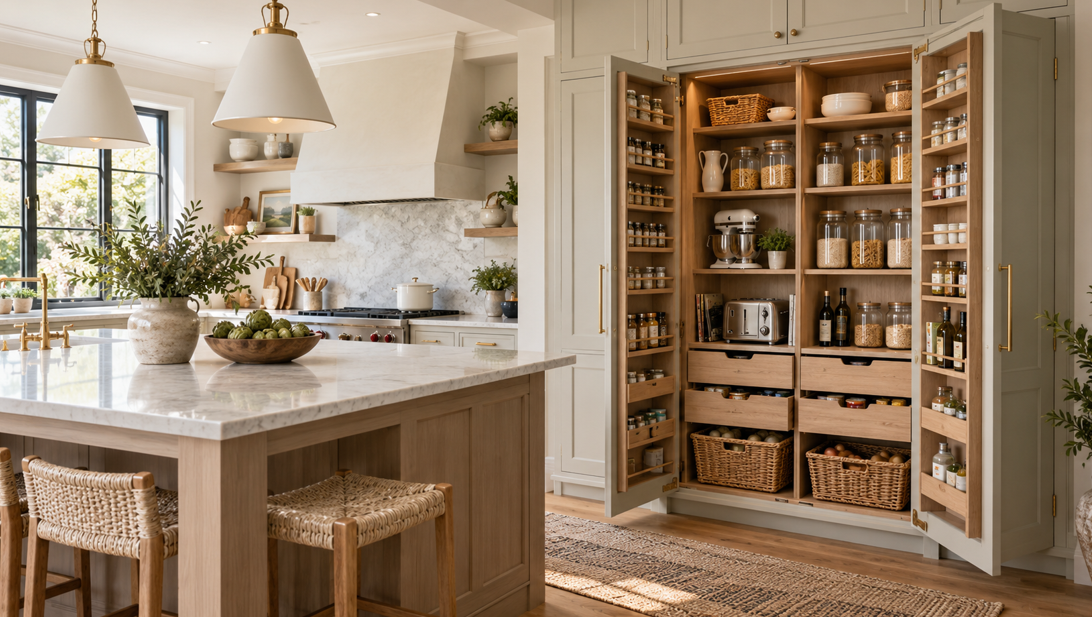
A kitchen can have beautiful finishes and plenty of floor space and still feel frustrating when everyday food, small appliances, serving pieces, and household supplies do not have a sensible place to go. That is one reason built-in pantry cabinets have become such a strong kitchen renovation trend in 2026.
The 2026 U.S. Houzz Kitchen Trends Study found that more than three-quarters of renovating homeowners include built-in features, and pantry cabinets lead the category at 47%. For families in Stoufferstown and across Franklin County, the appeal is easy to understand: a well-planned pantry keeps frequently used items organised, reduces worktop clutter, and makes better use of vertical space without requiring a separate walk-in room.
At Dick's Cabinetry & Flooring, we help homeowners look at storage as part of the whole kitchen rather than an afterthought. A pantry cabinet can be a simple tall cabinet, a full wall of coordinated storage, or a customised zone with pull-outs and adjustable shelving. The right choice depends on how your household cooks, shops, and uses the room every day.
Why Are Built-In Pantry Cabinets So Popular in 2026?
The short answer is that homeowners want kitchens that work harder without necessarily becoming larger.
Many families are storing more in the kitchen than previous generations did. There are bulk groceries, reusable containers, countertop appliances, school snacks, pet supplies, baking ingredients, serving dishes, and the everyday extras that tend to collect wherever there is space. When those items are spread across several cabinets, the kitchen can feel crowded even when it has a reasonable amount of storage.
A built-in pantry creates one defined home for many of those items. Instead of adding freestanding furniture or relying on shelves in another room, the pantry becomes part of the cabinetry plan. That keeps the kitchen visually consistent while using wall height and depth more efficiently.
The trend also fits a broader shift towards practical kitchen design. The 2026 Houzz study found that 84% of renovating homeowners upgrade cabinetry, while 94% of those upgrading cabinets incorporate speciality storage features. Pull-out waste and recycling bins, tray storage, spice storage, deep drawers, and pull-out shelves all point in the same direction: people want storage that is easier to reach and easier to keep organised.
For Stoufferstown homeowners, that can be especially useful in family kitchens where one room handles breakfast, packed lunches, homework, evening meals, and weekend gatherings. A pantry cabinet gives the room a dedicated storage centre without asking the family to change how they live.
What Is a Built-In Pantry Cabinet?
A built-in pantry cabinet is a tall cabinet or group of cabinets designed primarily for food, appliance, and household storage. It is fitted as part of the kitchen cabinetry, so it can match or complement the surrounding doors, finishes, hardware, and trim.
The simplest version is a floor-to-ceiling or near-ceiling-height cabinet with adjustable shelves. From there, the design can become more specialised.
Common pantry configurations include:
Tall pantry cabinets: full-height units with adjustable interior shelves.
Pull-out pantries: narrow cabinets with shelves or baskets that pull towards you for easier access.
Pantry walls: several tall cabinets grouped together for a large amount of enclosed storage.
Appliance pantries: cabinets designed to hold items such as mixers, coffee makers, slow cookers, and air fryers.
Combination pantries: layouts that mix drawers, adjustable shelves, pull-outs, and worktop-height storage.
Pocket-door pantry cabinets: tall units with doors that open and tuck away, creating an accessible work or storage zone when in use.
A built-in pantry is different from a walk-in pantry. A walk-in pantry requires a separate room or enclosed area with enough floor space to enter. A cabinet pantry uses the kitchen footprint itself.
That distinction can make cabinet pantries a practical fit for homes where adding a separate room is not realistic. You gain concentrated storage while preserving more floor space for cooking, dining, or circulation.
How Can a Pantry Cabinet Make a Stoufferstown Kitchen Work Better?
The biggest benefit is not the number of shelves. It is having storage designed around what your household actually uses.
Start by thinking about the items that currently create friction in your kitchen. Maybe cereal boxes are stacked above eye level. Perhaps canned goods disappear at the back of deep shelves. Small appliances take over the worktop because carrying them from another room is inconvenient. Or snacks end up in several different cupboards because there is no dedicated family zone.
A well-planned pantry can address those problems directly.
Keep Everyday Food in One Easy-to-Find Zone
Grouping dry goods in a pantry makes grocery unloading and meal preparation more straightforward. Adjustable shelves can accommodate cereal boxes, jars, canned goods, baking supplies, and larger packages without leaving large areas of wasted vertical space.
If different members of the household use the pantry, creating simple zones can help. Breakfast items can stay together, baking ingredients can occupy another shelf, and grab-and-go snacks can be kept at a height children can reach comfortably.
Get Small Appliances Off the Worktop
Many kitchens collect appliances faster than they collect usable worktop space. A pantry with deeper shelves or a dedicated appliance section can keep less frequently used equipment close by without leaving everything on display.
For homeowners who bake or entertain often, the pantry can also store trays, serving pieces, pitchers, and seasonal kitchenware that would otherwise compete with daily dishes.
Make Deep Storage Easier to Reach
Depth is useful until food gets lost at the back. Pull-out shelves, roll-out trays, and drawers can turn a deep pantry into accessible storage rather than a place where forgotten items accumulate.
This is one area where thoughtful cabinetry makes a noticeable difference. Interior fittings can be selected around the way the pantry will be used instead of relying on a row of fixed shelves for every item.
Reduce Visual Clutter
Closed pantry doors can hide a large amount of everyday packaging, appliances, and supplies. That creates a calmer kitchen without requiring the homeowner to keep every shelf display-ready.
For open-plan homes, where the kitchen is visible from the dining or living area, enclosed storage can be especially valuable.
Which Pantry Cabinet Layout Works Best?
There is no single pantry layout that fits every kitchen. The right design depends on the available wall space, traffic flow, storage volume, and what you want to keep inside.
A Single Tall Pantry for Smaller Kitchens
A single full-height cabinet can add useful storage without taking over the room. It works well beside a refrigerator, at the end of a cabinet run, or on a short wall that cannot accommodate a larger bank of units.
Adjustable shelving keeps this layout flexible over time. A mix of shelves and lower drawers can also improve access to heavier items.
A Pantry Wall for High-Storage Households
If your family buys in larger quantities or stores many kitchen items, a run of tall cabinets can function almost like a walk-in pantry without requiring a separate room.
One section can hold food, another can house small appliances, and another can handle less frequently used serving pieces. Keeping these functions together can free wall and base cabinets near the main cooking zone for cookware, dishes, and preparation tools.
A Narrow Pull-Out Pantry for Tight Spaces
Narrow spaces beside appliances or at the end of a run can sometimes become useful storage with a pull-out pantry. Because the contents move out towards you, it is easier to see items stored towards the back.
This style works particularly well for bottles, tins, jars, spices, and other smaller pantry items. It can make use of a slim area that might otherwise become a filler panel.
An Appliance Pantry for Clear Worktops
An appliance pantry is useful for households with several countertop machines. Depending on the design, appliances can be stored on shelves and moved to the worktop when needed, or housed in a purpose-planned cabinet zone.
What Pantry Features Are Worth Considering?
The most useful pantry is not necessarily the one with the longest list of accessories. It is the one where the interior features solve real problems.
Adjustable Shelving
Food packaging changes, shopping habits change, and households change. Adjustable shelves give you flexibility to reconfigure the pantry rather than living with fixed gaps that no longer suit what you store.
Pull-Out Shelves and Drawers
Pull-outs improve visibility and access, especially in deep cabinets. They can be particularly helpful for heavy cookware, canned goods, baking ingredients, and supplies stored below waist height.
Door Storage
Some pantry designs can use the inside of the doors for shallow items. This keeps smaller products visible while reserving the main cabinet depth for larger packages.
Dividers and Vertical Storage
Trays, cutting boards, baking sheets, and serving boards are often easier to use when stored vertically. Dividers can prevent a stack from becoming awkward to lift every time you need the piece at the bottom.
Interior Lighting
Lighting can make a deep or full-height pantry more usable, particularly when dark finishes are selected. Integrated lighting also helps homeowners quickly see what is on a shelf rather than moving items around to find something.
A Mixture of Storage Types
Shelves are useful, but they do not have to do everything. Combining drawers, pull-outs, shelves, and vertical dividers can give each type of item a more suitable place.
Before selecting accessories, make a rough list of what you expect the pantry to hold. That simple exercise often makes it much clearer which features are worth the investment.
How Do Pantry Cabinets Fit the Style of Franklin County Homes?
A pantry cabinet is a functional feature, but it still takes up a noticeable amount of visual space. The finish and door style can help it feel like a natural part of the kitchen.
Franklin County has a strong farmhouse and rural-home influence, which makes natural wood tones, Shaker-style doors, and traditional details comfortable choices for many properties. Warm wood cabinetry is also having a strong year nationally. Houzz's 2026 kitchen research found that wood has moved ahead of white as the most popular cabinet colour among renovating homeowners.
A natural wood pantry can add warmth and texture, especially when paired with quieter worktop and backsplash choices. Painted cabinetry remains a versatile option as well, particularly if you want the pantry to blend into the rest of the kitchen or create contrast against an island.
The goal is not to chase a trend. It is to choose a style that works with the architecture of the home and still feels right years from now.
Do Pennsylvania Seasons Affect Pantry Cabinet Planning?
Pennsylvania's seasonal changes are worth keeping in mind when natural wood is part of the design.
South Central PA moves from humid summers into cold winters when indoor heating can make homes much drier. Wood responds naturally to changes in moisture in the air, so some movement through the seasons is normal. Maintaining reasonably stable indoor humidity can help cabinetry and other wood products perform well over time.
July is also a useful planning period for Stoufferstown homeowners thinking about a kitchen update later in the year. Fall is a popular renovation season across Franklin County, particularly for families hoping to improve their kitchen before holiday gatherings. Starting the design process in summer provides more time to review cabinet styles, storage requirements, measurements, and project scope.
A pantry plan is especially worth considering early because tall cabinets affect the overall layout. Their relationship to the refrigerator, doorways, work zones, and ceiling height needs to be thought through before the final cabinet order.
Is a Built-In Pantry Better Than a Freestanding Pantry?
For many kitchens, a built-in pantry offers a cleaner appearance and more efficient use of space, but freestanding storage can still make sense in the right situation.
Built-in pantry cabinet | Freestanding pantry |
|---|---|
Designed to fit the kitchen layout | Can be moved or replaced |
Matches surrounding cabinets | May have a different finish or style |
Can use full wall height | Often leaves unused space above |
Offers tailored interior storage | Usually has a fixed interior layout |
Requires planning and installation | Faster to add to an existing room |
If you are already replacing kitchen cabinets, built-in pantry storage is worth considering because it can be incorporated into the layout from the beginning. If the kitchen is staying largely unchanged and you need additional storage quickly, a freestanding piece may be a practical interim option.
Plan the Pantry Around Your Household, Not a Trend
The fact that pantry cabinets are a leading 2026 kitchen feature does not mean every pantry needs to look the same.
A household that cooks from scratch may want easy access to grains, baking supplies, oils, and larger ingredients. A family with children might prioritise snack storage, lunch supplies, and breakfast items. Someone who entertains often may need space for serving pieces, drinks, and less frequently used appliances.
Before deciding on a design, consider:
What do you want to remove from your current worktops?
Which food items are hardest to organise now?
Do you buy groceries in bulk?
Which shelves need to be accessible to children or older family members?
Which appliances would you rather store out of sight?
Would drawers or pull-outs be easier to use than deep shelves?
How much pantry storage do you realistically need?
Those answers are more valuable than copying a pantry from a photograph. Good storage feels natural because it is built around the people who use it.
Add Practical Storage to Your Stoufferstown Kitchen
Built-in pantry cabinets are popular in 2026 for a straightforward reason: they help kitchens stay organised, functional, and easier to live with. The Houzz data shows that pantry cabinets now lead built-in kitchen features, but the real value comes from choosing a layout that solves the storage problems in your own home.
For a Stoufferstown kitchen, that could mean one tall pantry beside the refrigerator, a wall of coordinated storage, deep drawers for bulk items, or a pantry designed around small appliances and family routines.
Dick's Cabinetry & Flooring has been serving Chambersburg and the surrounding Franklin County communities since 2013. Our team can help you compare cabinet styles, think through storage features, and build a pantry plan that fits both your kitchen and your budget.
If you are considering new cabinets or a kitchen storage upgrade, get in touch to arrange a free in-home estimate or visit our Chambersburg showroom at 1649 Lincoln Way East.


